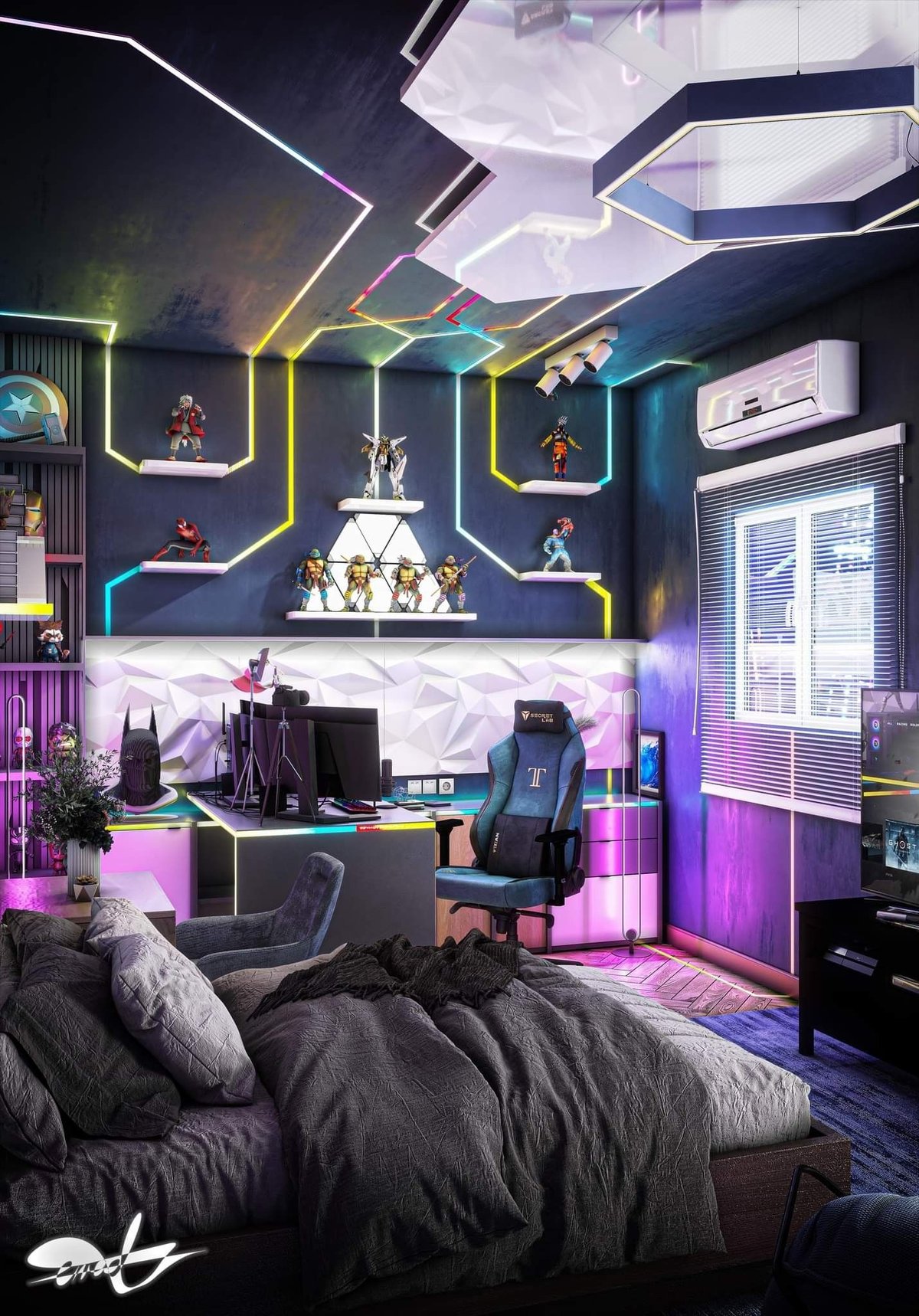
The hum of a finely tuned gaming PC, the lightning-fast response of a high-refresh monitor, the tactile satisfaction of a mechanical keyboard—these are the hallmarks of a truly elite setup. When we talk about something like a Riley Ou Gaming Setup, we’re not just discussing a collection of parts; we're envisioning a meticulously curated ecosystem designed for peak performance, immersion, and competitive advantage. While specific public details about "Riley Ou's" exact hardware choices can be elusive, the underlying principles of a top-tier gaming rig are universal. This guide delves into what it truly means to build a setup that meets such a demanding standard, exploring the high-end components, essential peripherals, and crucial optimizations that empower optimal performance.
At a Glance: Crafting a Performance-Driven Gaming Setup
- Focus on Balanced Power: Prioritize a strong CPU-GPU pairing, ensuring neither bottlenecks the other.
- Speed is King (and Queen): High refresh rate monitors, low latency peripherals, and NVMe SSDs are non-negotiable.
- Ergonomics for Endurance: A comfortable chair and desk setup are critical for long gaming sessions.
- Beyond the Hardware: Don't neglect software optimization, driver updates, and stable internet.
- Future-Proofing Mindset: Invest in components that offer a clear upgrade path or longevity.
- The "Riley Ou" Standard: A setup where every component is chosen to eliminate compromise and maximize the gaming experience.
The Pursuit of Perfection: What Defines a "Riley Ou" Level Setup?
In the world of gaming, "optimal performance" isn't merely a catchphrase; it's a measurable objective. It means achieving buttery-smooth frame rates at high resolutions, ensuring instantaneous responsiveness to every input, and immersing yourself completely in the game's world without a stutter or tear. For someone aspiring to a "Riley Ou" level setup, this pursuit drives every decision. It's about eliminating bottlenecks, minimizing latency, and maximizing fidelity.
When considering a name like Riley Ou, it immediately conjures images of a serious player or content creator who demands the absolute best from their gear. Such individuals often prioritize reliability and cutting-edge technology to maintain a competitive edge or deliver a pristine viewing experience to their audience. While we might not have a public inventory list for a specific "Riley Ou" to scrutinize every detail, we can certainly outline the components and considerations that would comprise such a formidable battle station. To understand the person behind the setup, you might want to learn more about Riley Ou.
The Brain and Brawn: Unpacking the Powerhouse PC
At the heart of any elite gaming setup is the PC itself – the central nervous system and muscular core. This isn't just about raw power; it's about a harmonious synergy of components working together seamlessly.
The CPU: Command Central for Complex Worlds
The Central Processing Unit (CPU) is the brain of your operation, handling everything from game logic and AI to physics simulations and background tasks. For a high-performance gaming setup, you're typically looking at top-tier offerings from Intel (e.g., Core i7 or i9) or AMD (Ryzen 7 or 9).
Why high-end? Modern games, especially open-world titles or those with complex simulations, are increasingly CPU-intensive. A powerful CPU ensures smooth frame delivery, even during intense action, and is crucial for streamers who game and encode simultaneously. Look for high core counts (8-16) and strong single-core performance, as many games still benefit greatly from the latter.
The GPU: The Visual Powerhouse That Fuels Immersion
If the CPU is the brain, the Graphics Processing Unit (GPU) is the visual artist, rendering every pixel, texture, and effect you see on screen. This is often the single most expensive and impactful component in a gaming PC, especially for those targeting high resolutions (1440p, 4K) and high refresh rates (144Hz+).
For a "Riley Ou" setup, we're talking about the flagship cards from NVIDIA (like the RTX 4080 Super or RTX 4090) or AMD (such as the RX 7900 XTX). These cards offer immense VRAM (typically 16GB or more), advanced ray tracing capabilities for hyper-realistic lighting, and enough raw horsepower to chew through the most demanding titles. The choice often comes down to specific feature sets (NVIDIA's DLSS and robust streaming encoders vs. AMD's FSR and competitive rasterization performance).
RAM: The Multitasking Maestro
Random Access Memory (RAM) acts as the short-term memory for your PC, allowing quick access to data your CPU and GPU need. While 16GB of DDR4 or DDR5 RAM is the sweet spot for most gamers, a high-end setup aspiring to the "Riley Ou" standard would likely push to 32GB.
Why 32GB? It provides ample headroom for demanding games, ensures smooth operation while streaming, running multiple applications, or working on content creation tasks in the background. Speed matters too: aim for DDR5 RAM with speeds of 6000MHz or higher and low CAS latency for optimal performance.
Storage: Speed and Space for a Digital Kingdom
Gone are the days of slow mechanical hard drives for primary storage. A premium gaming setup demands NVMe Solid State Drives (SSDs) for the operating system, games, and frequently accessed applications. NVMe drives connect directly to the motherboard via PCIe, offering blazing fast read/write speeds that drastically reduce load times and improve system responsiveness.
You'd want at least a 1TB primary NVMe drive, perhaps 2TB or more, with PCIe Gen 4 or Gen 5 for the fastest speeds available. For storing a large game library, video footage, or other media, a secondary high-capacity SATA SSD or even a large HDD (for archival) might supplement the NVMe drives.
Motherboard: The Unsung Hero Connecting It All
Often overlooked, the motherboard is the backbone that connects every component, facilitating communication and power delivery. For a high-end build, you're looking for a robust motherboard from a reputable brand (e.g., ASUS ROG, MSI MEG, Gigabyte Aorus, ASRock Taichi).
Key features to consider include:
- Chipset: Compatible with your chosen CPU (e.g., Z790 for Intel, X670E for AMD).
- VRMs (Voltage Regulator Modules): High-quality VRMs ensure stable power delivery to your CPU, especially important for overclocking.
- Connectivity: Ample USB ports (including high-speed USB-C), multiple M.2 slots for NVMe SSDs, fast Ethernet (2.5GbE or 10GbE), and Wi-Fi 6E/7.
- PCIe Slots: Ensure enough lanes for your GPU and potentially other expansion cards.
Power Supply (PSU): The Unwavering Foundation
The Power Supply Unit (PSU) is the unsung hero, providing stable and consistent power to all your components. Skimping on the PSU can lead to instability, component damage, or even fire. For a high-end system with a flagship CPU and GPU, you'll need significant wattage—typically 850W to 1200W, depending on your specific components and overclocking plans.
Beyond wattage, look for an 80 PLUS Platinum or Titanium rating for superior efficiency, which means less wasted energy as heat and lower electricity bills. A fully modular PSU is highly recommended for easier cable management and a cleaner build aesthetic.
Cooling Systems: Keeping the Beast Chill
High-performance components generate heat, and effective cooling is paramount to maintain optimal performance and prolong component lifespan. Overheating can lead to throttling, where components intentionally slow down to prevent damage.
For a "Riley Ou" class setup, you're likely considering:
- High-End Air Coolers: Noctua NH-D15 or Deepcool Assassin III can rival some liquid coolers in performance while being less complex.
- All-in-One (AIO) Liquid Coolers: These closed-loop systems offer excellent performance and a sleek look, especially 280mm or 360mm radiators.
- Custom Liquid Cooling Loops: For enthusiasts who demand the absolute best in cooling and aesthetics, a custom loop offers superior thermal performance and the ability to cool multiple components (CPU, GPU) within a single system. This is a significant investment in both time and money but offers unparalleled results.
Beyond the Tower: Essential Peripherals for Peak Performance
A powerful PC is only half the equation. The peripherals are your direct interface with the game, translating your intentions into action and feeding you crucial visual and auditory feedback.
Gaming Monitors: Your Window to Victory
The monitor is arguably the most critical peripheral for a gamer. For a "Riley Ou" level setup, you're likely looking at a multi-monitor setup, with at least one primary display that boasts top-tier specifications.
Key considerations:
- Resolution: 1440p (QHD) is a popular sweet spot for competitive gaming, offering sharp visuals without overly taxing the GPU. 4K (UHD) delivers stunning detail for single-player immersive experiences but requires a top-tier GPU.
- Refresh Rate: 144Hz, 240Hz, or even 360Hz are standard for competitive play, providing incredibly smooth motion and reduced input lag.
- Response Time: 1ms (GtG) is ideal to minimize ghosting and motion blur.
- Panel Type: IPS panels offer excellent color accuracy and viewing angles, while TN panels traditionally have faster response times (though IPS is catching up). OLED panels deliver unparalleled contrast and true blacks but come at a higher price.
- Adaptive Sync: NVIDIA G-Sync or AMD FreeSync are essential for tear-free gaming, synchronizing the monitor's refresh rate with the GPU's frame output.
- Size & Aspect Ratio: 27-inch to 34-inch ultrawide monitors are popular.
- Understanding the advantages of a dedicated gaming monitor is crucial here; a standard office display simply won't cut it.
Keyboard & Mouse: Precision and Responsiveness at Your Fingertips
Your input devices are extensions of your will. For competitive play or intricate control, nothing less than the best will do.
- Gaming Keyboard: Mechanical keyboards are the standard, offering superior tactile feedback, durability, and customization. Switches (Cherry MX, Gateron, Kailh, etc.) come in various types (linear, tactile, clicky) to suit personal preference. Features like N-key rollover, anti-ghosting, and programmable macros are essential.
- Gaming Mouse: Precision and speed are key. Look for a high-DPI optical sensor (e.g., from PixArt), lightweight design (often under 80g), comfortable ergonomics (palm, claw, fingertip grip specific designs), and customizable buttons. Wireless gaming mice have advanced to the point where they offer virtually no perceptible latency compared to wired options. Spend time picking the right gaming mouse for your specific grip and play style.
Headset: Immersive Audio and Crystal-Clear Comms
Audio is just as important as visuals for situational awareness in many games. A quality gaming headset provides spatial audio cues, allowing you to pinpoint enemy footsteps or gunshots, and ensures crystal-clear communication with teammates.
Key features:
- Sound Quality: Detailed audio reproduction with a good soundstage. Virtual surround sound (7.1) can enhance immersion.
- Microphone: A clear, noise-canceling microphone is vital for competitive team play or streaming. Detachable mics offer versatility.
- Comfort: Over-ear designs with plush earcups and an adjustable headband for long sessions.
- Connectivity: Wired (USB or 3.5mm) for zero latency or high-quality wireless (2.4GHz) for freedom of movement.
Webcam & Microphone: Being Seen and Heard (for Streamers)
For streamers or content creators who want to build a public persona like Riley Ou, high-quality video and audio capture are non-negotiable.
- Webcam: A dedicated external webcam (like a Logitech StreamCam or Elgato Facecam) offers significantly better quality than built-in laptop cameras. Aim for 1080p at 60fps, or even 4K, for crisp, smooth video. Good low-light performance and autofocus are important.
- Microphone: A standalone condenser microphone (USB or XLR) is a major upgrade. Brands like Blue Yeti, Rode, or Shure are popular choices. XLR mics combined with an audio interface offer the best fidelity and control. Acoustic treatment of the room can also dramatically improve audio quality.
The Environment: Optimizing Your Gaming Space
The physical space around your setup significantly impacts comfort, focus, and overall experience.
Desk & Chair: Ergonomics for Endurance
Long gaming sessions demand excellent ergonomics.
- Gaming Chair: A high-quality ergonomic gaming chair (or an ergonomic office chair) provides crucial lumbar support, adjustability for armrests, seat height, and recline. This prevents fatigue and potential injury. Understanding the benefits of investing in a quality gaming chair goes beyond just looks; it's about health and endurance.
- Gaming Desk: A spacious, sturdy desk is essential to accommodate multiple monitors, a large mouse pad, and peripherals without feeling cramped. Adjustable height desks are a bonus for alternating between sitting and standing.
Lighting: Setting the Mood and Reducing Strain
Thoughtful lighting can enhance immersion and reduce eye strain.
- Bias Lighting: LEDs behind your monitor reduce eye fatigue by minimizing the contrast between the screen and the dark background.
- Ambient RGB Lighting: While often seen as purely aesthetic, strategically placed RGB strips or smart lights can create an immersive environment that syncs with your games.
Cable Management: Tidy Space, Clear Mind
A messy tangle of cables is not only unsightly but can also impede airflow and make troubleshooting a nightmare. For a "Riley Ou" setup, meticulous cable management is expected. Use cable ties, sleeves, channels, and adhesive clips to route wires cleanly, ideally behind the desk or along its frame.
Internet Connectivity: Lag is the Enemy
Even the most powerful PC is useless for online gaming if your internet connection is unreliable.
- Wired Ethernet: Always prioritize a wired Ethernet connection over Wi-Fi for competitive gaming. It provides superior speed, stability, and lower latency.
- High-Speed Broadband: Invest in the fastest internet plan available in your area.
- Quality Router: A modern, high-performance router (Wi-Fi 6/7 capable) is crucial for managing multiple devices and maintaining strong signals, even for wired connections.
Software, Optimization, and Future-Proofing
Hardware is foundational, but software and strategic planning complete the picture.
Drivers & Updates: Keeping Things Smooth
Outdated drivers are a common culprit for performance issues. Regularly update your:
- GPU Drivers: NVIDIA (GeForce Experience) and AMD (Adrenalin Software) frequently release game-ready drivers.
- Chipset Drivers: From your motherboard manufacturer.
- Windows Updates: Essential for security and performance improvements.
- Peripheral Firmware: Keyboards, mice, and headsets often have firmware updates that enhance functionality.
System Optimization: Squeezing Every Frame
- Background Processes: Close unnecessary applications running in the background while gaming.
- Game Settings: Experiment with in-game graphics settings to find the optimal balance between visual quality and frame rate for your specific hardware.
- Overclocking: For advanced users, safely overclocking your CPU, GPU, and RAM can yield small but noticeable performance gains. (Always research and proceed with caution).
- Windows Settings: Optimize power plans, disable unnecessary visual effects, and ensure game mode is active. You can even fine-tune things like optimizing your gamepad settings for specific titles.
Future-Proofing: Smart Upgrades, Not Constant Overhauls
True "Riley Ou" setups are built with longevity in mind. While technology evolves rapidly, smart choices can extend your setup's relevance:
- Scalable Motherboard: Choose a motherboard that can support future CPU generations (within the same socket family) or has plenty of M.2 slots for storage expansion.
- Generous PSU: A higher wattage PSU provides headroom for future, more power-hungry GPUs.
- Modular Design: Opt for components that are easy to swap out or upgrade (e.g., modular PSUs, easily accessible RAM slots).
- Prioritize the Core: Invest heavily in the CPU and GPU, as these have the biggest impact on gaming performance and are the most expensive to upgrade. The best lightweight PC games might not push your hardware, but modern AAA titles certainly will.
The "Why": Performance vs. Price
It's important to acknowledge that there are diminishing returns at the very highest end of the hardware spectrum. Going from an RTX 4080 Super to an RTX 4090 might offer a 15-20% performance boost for a disproportionately higher price. A "Riley Ou" setup implies pushing past these diminishing returns for the absolute pinnacle of experience, regardless of cost-effectiveness. For most users, finding the "sweet spot" where price-to-performance is optimized is key.
Common Misconceptions About High-End Setups
Even with all the data, some myths persist about building or owning a premium gaming setup.
"Do I really need the absolute best of everything?"
Not necessarily. While a "Riley Ou" setup might aim for top-tier components across the board, individual needs vary. A competitive esports player might prioritize a 360Hz 1080p monitor and a powerful CPU/GPU for high frame rates, while a single-player enthusiast might prefer a beautiful 4K 144Hz OLED and a slightly less powerful (but still high-end) GPU. The "best" is subjective and depends on your primary use case.
"Is RGB just for looks?"
Mostly, yes. While some RGB lighting can provide functional cues (like temperature indicators), for the vast majority, it's about aesthetics and personal expression. However, for content creators, a visually appealing setup can be part of their brand.
"Can I save money by building it myself?"
Generally, yes. Building a PC yourself can save you hundreds, even thousands, compared to a pre-built system of comparable specifications. It also offers invaluable experience and complete control over component choices. However, it requires research, patience, and a willingness to learn. For those without the time or confidence, a custom builder or reputable pre-built system can be a good option.
"What's the most important component?"
It depends on your target resolution and refresh rate. For 1080p/1440p high refresh rate gaming, the CPU and GPU are equally important. For 4K gaming, the GPU typically becomes the primary bottleneck. However, a balanced system is always best; a powerful GPU paired with a weak CPU will still underperform.
Building Your Own "Riley Ou" Level Setup: Your Next Steps
Crafting a gaming setup that lives up to the "Riley Ou" standard is a significant undertaking, but it's also an incredibly rewarding journey. It requires careful planning, research, and a clear understanding of your priorities.
- Define Your Budget: Be realistic about how much you're willing to invest. High-end setups can easily run into several thousands of dollars.
- Identify Your Primary Use Case: Are you a competitive esports player, a streamer, a content creator, or someone who simply wants the best visual fidelity for single-player games? Your focus will dictate where you allocate most of your budget.
- Research, Research, Research: Dive deep into reviews, benchmarks, and community discussions for specific components. Sites like TechRadar, Gamers Nexus, Hardware Unboxed, and forums like Reddit's r/buildapc are invaluable resources.
- Component Compatibility: Use online tools like PCPartPicker to ensure all your chosen components are compatible and your PSU provides sufficient wattage.
- Consider Professional Help (or DIY): Decide if you're comfortable assembling the PC yourself or if you'd prefer to purchase a pre-built system from a reputable custom builder.
The goal isn't just to own an expensive setup; it's to own a system that consistently delivers an unparalleled experience, pushing the boundaries of what gaming can be. By focusing on powerful core components, precise peripherals, an optimized environment, and meticulous attention to detail, you can create a gaming sanctuary that truly performs at an elite level. What will your "Riley Ou" setup look like? The journey to optimal performance begins with your first informed choice.